
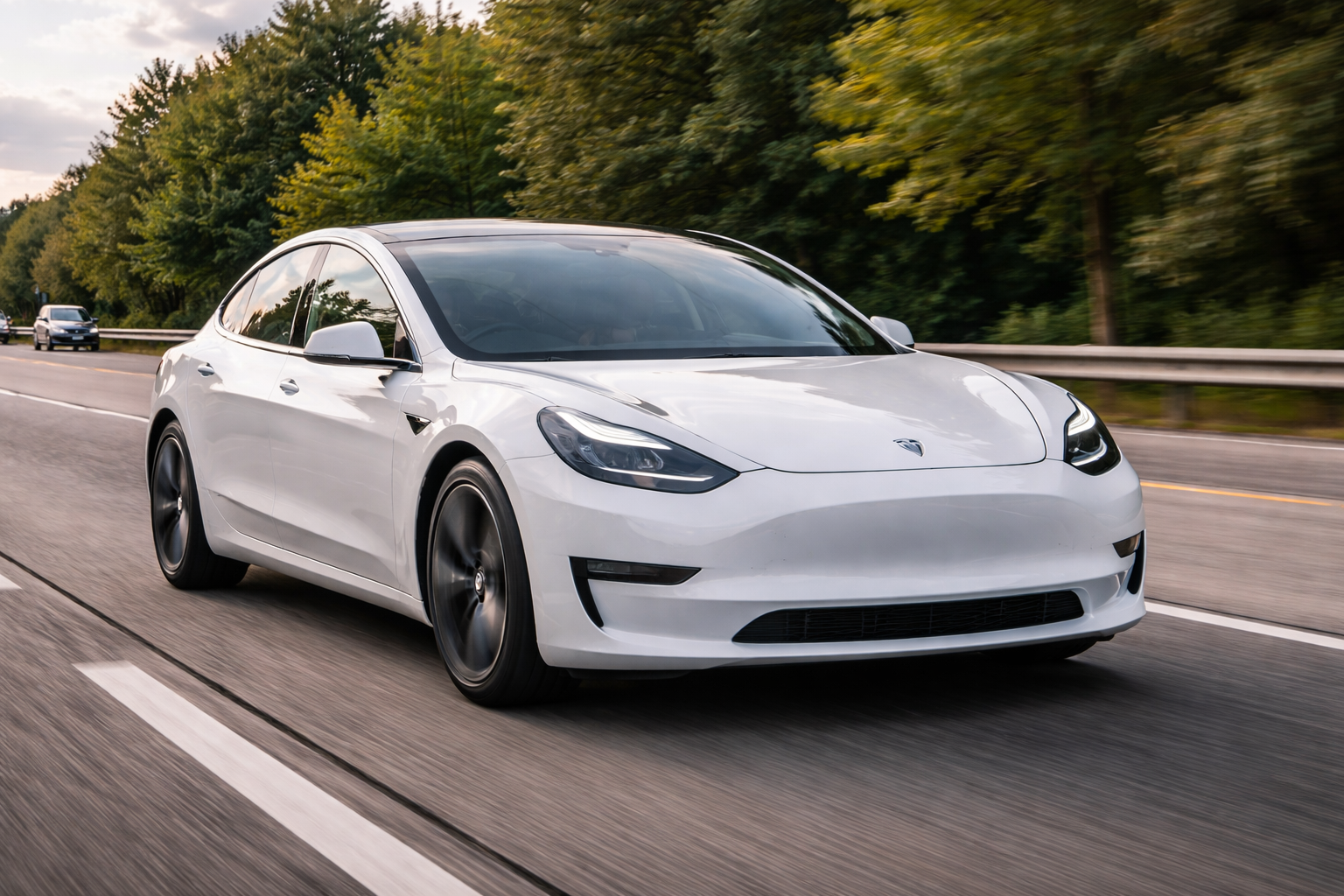
Shares of Tesla fell 3.97% on Tuesday, extending the previous session’s losses, as investors continued to assess weaker-than-expected first-quarter delivery data and rising concerns around valuation and demand.
The electric vehicle maker reported deliveries of 358,023 vehicles in the first quarter, missing Wall Street expectations of roughly 366,000 units.
Production totaled 408,386 vehicles, creating a gap of around 50,000 units and raising concerns about inventory build-up and pricing pressure.
Tesla has now declined for 3 straight sessions, falling 11.4% in the period.
Delivery miss fuels demand concerns
Tesla’s first-quarter results highlighted ongoing pressure on demand despite efforts to stimulate sales through discounts and price cuts.
The company deployed 8.8 GWh of energy storage during the quarter, falling short of expectations of more than 14 GWh.
The weaker delivery figures come amid the expiration of EV incentives and intensifying competition. Analysts noted that promotions had only a limited impact on boosting demand.
JPMorgan analyst Ryan Brinkman flagged the growing inventory as a key concern, stating that the “record surge in unsold vehicles adds to free cash flow woes.”
He added, “We … advise investors approach TSLA shares with a high degree of caution,” citing risks tied to demand, execution, and competition.
The firm maintained an underweight rating on Tesla with a $145 price target and lowered its 2026 earnings estimate.
Investor Bill Maurer also pointed to continued downward revisions in expectations.
“The Q1 numbers announced Thursday were not good, to say the least, and that will only fuel demand questions even further moving forward. Investors were already on edge about Tesla’s huge spending plans for this year, and the latest news will increase concerns about the company’s near-term future,” Maurer said.
Valuation and spending add to pressure
Tesla’s valuation remains a sticking point for many analysts.
The stock was trading at nearly 175 times its expected adjusted earnings for 2026, far above traditional automakers, which are valued at single-digit multiples.
Even compared with major technology companies—often trading at 20 to 30 times earnings—Tesla appears expensive, despite its positioning as a tech-driven business.
At the same time, spending is expected to rise significantly.
Capital expenditure is projected to reach around [MONEY value=”20000000000″ currency=”usd” notation=”long” replace=”false”] this year, up from [MONEY value=”8500000000″ currency=”usd” notation=”long” replace=”false”] last year, as Tesla invests heavily in artificial intelligence initiatives, robotics, and its planned robotaxi network.
The increased spending is expected to weigh on free cash flow, with some analysts forecasting negative free cash flow in the near term.
Mixed global trends and regulatory updates
Despite the broader challenges, Tesla reported pockets of strength in international markets.
In the United Kingdom, registrations rose 20% year-on-year to 8,599 units, while South Korea saw a 330% surge to 11,134 vehicles in March, driven by price cuts on China-made models.
France also showed strong growth, with registrations rising 203% year-on-year in the first quarter. In China, locally manufactured EV sales increased 23.5% year-on-year, accelerating from the previous quarter.
However, Tesla continues to face stiff competition. In the UK, rival BYD outpaced Tesla with a 133% increase in registrations to 15,162 units.
On the regulatory front, the National Highway Traffic Safety Administration closed a probe into approximately 2.6 million Tesla vehicles related to the “Actually Smart Summon” feature, citing low severity and frequency of incidents.
Separately, the agency upgraded its investigation into Tesla’s Full Self-Driving system to an “engineering analysis,” a step that could precede a potential recall.
With delivery growth slowing, competition intensifying, and valuation concerns persisting, Tesla faces a challenging near-term outlook as investors await its full first-quarter results later this month.
The post Tesla stock plunges 4% on Tuesday: why it’s falling appeared first on Invezz