
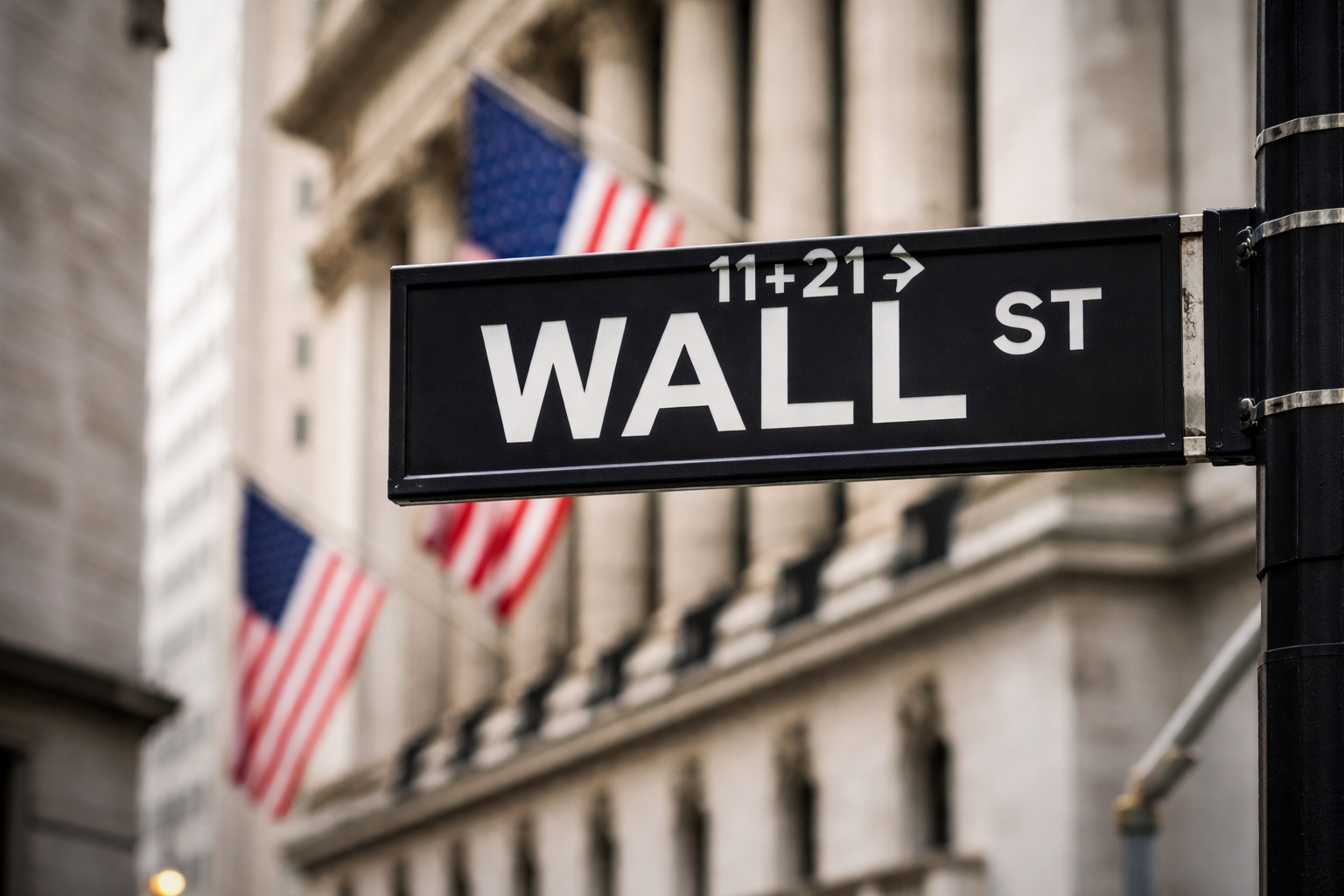
Wall Street’s main indexes opened lower on Tuesday as investors assessed escalating tensions between the United States and Iran ahead of President Donald Trump’s deadline for Tehran to reopen the Strait of Hormuz.
The Dow Jones Industrial Average was down 214 points, or 0.46%, while the S&P 500 index fell 0.42% and the Nasdaq 100 declined 0.47%, reflecting growing unease about the trajectory of the conflict and its potential economic impact.
Geopolitical tensions weigh on sentiment
Investor sentiment weakened after reports of fresh military action and increasingly aggressive rhetoric from both sides.
A US official said in a Reuters report that the country had struck military targets on Iran’s Kharg Island, a key hub for the country’s oil exports, though no energy infrastructure was impacted.
Iran responded by signaling a more confrontational stance, saying it would no longer hold back from targeting infrastructure belonging to its Gulf neighbors.
The developments come ahead of Trump’s Tuesday deadline for Iran to reopen the Strait of Hormuz—one of the world’s most critical oil shipping routes. However, Tehran has shown no indication of complying. A senior Iranian source said in a Reuters report that talks on lasting peace could begin only after an end to the strikes.
Trump’s own remarks added to uncertainty. In a Truth Social post, he said: “A whole civilization will die tonight, never to be brought back again. I don’t want that to happen, but it probably will.”
He also left open the possibility of avoiding further escalation, adding that “now that we have Complete and Total Regime Change, where different, smarter, and less radicalized minds prevail, maybe something revolutionarily wonderful can happen, WHO KNOWS?”
Oil prices surge, complicating inflation outlook
Rising geopolitical risk pushed energy prices higher, adding another layer of concern for investors. West Texas Intermediate crude futures climbed more than 2% to above $115 per barrel, while Brent crude advanced about 1% to above $111.
The spike in oil prices has raised questions about inflationary pressures at a time when the Federal Reserve is navigating a complex economic backdrop.
The ongoing conflict has complicated the interest rate outlook, as policymakers weigh the risk of renewed inflation against a still-resilient labor market.
This week, investors are expected to closely monitor upcoming inflation data to assess whether elevated crude prices are feeding into broader price pressures.
Health insurers rally on policy boost
Despite the broader market weakness, healthcare stocks provided a bright spot after the US government announced an increase in Medicare Advantage payment rates for 2027.
Shares of UnitedHealth Group rose about 8%, while Humana gained 7.4% and CVS Health added 5.1%.
The policy change, which raises payments by an average of 2.48%, is expected to improve the earnings outlook for insurers and offset some of the broader market pressure.
Meanwhile, chipmaker Broadcom gained 3.8% after announcing a long-term agreement with Alphabet’s Google to develop artificial intelligence chips and related components.
Wall Street’s main indexes had closed higher on Monday, with the S&P 500 and Nasdaq notching a fourth consecutive session of gains.
However, the benchmark S&P 500 remains about 4% lower since the Middle East conflict began, highlighting the continued sensitivity of markets to geopolitical developments.
The post Dow Jones slip 200 points as Trump Iran deadline fuels market fears appeared first on Invezz