
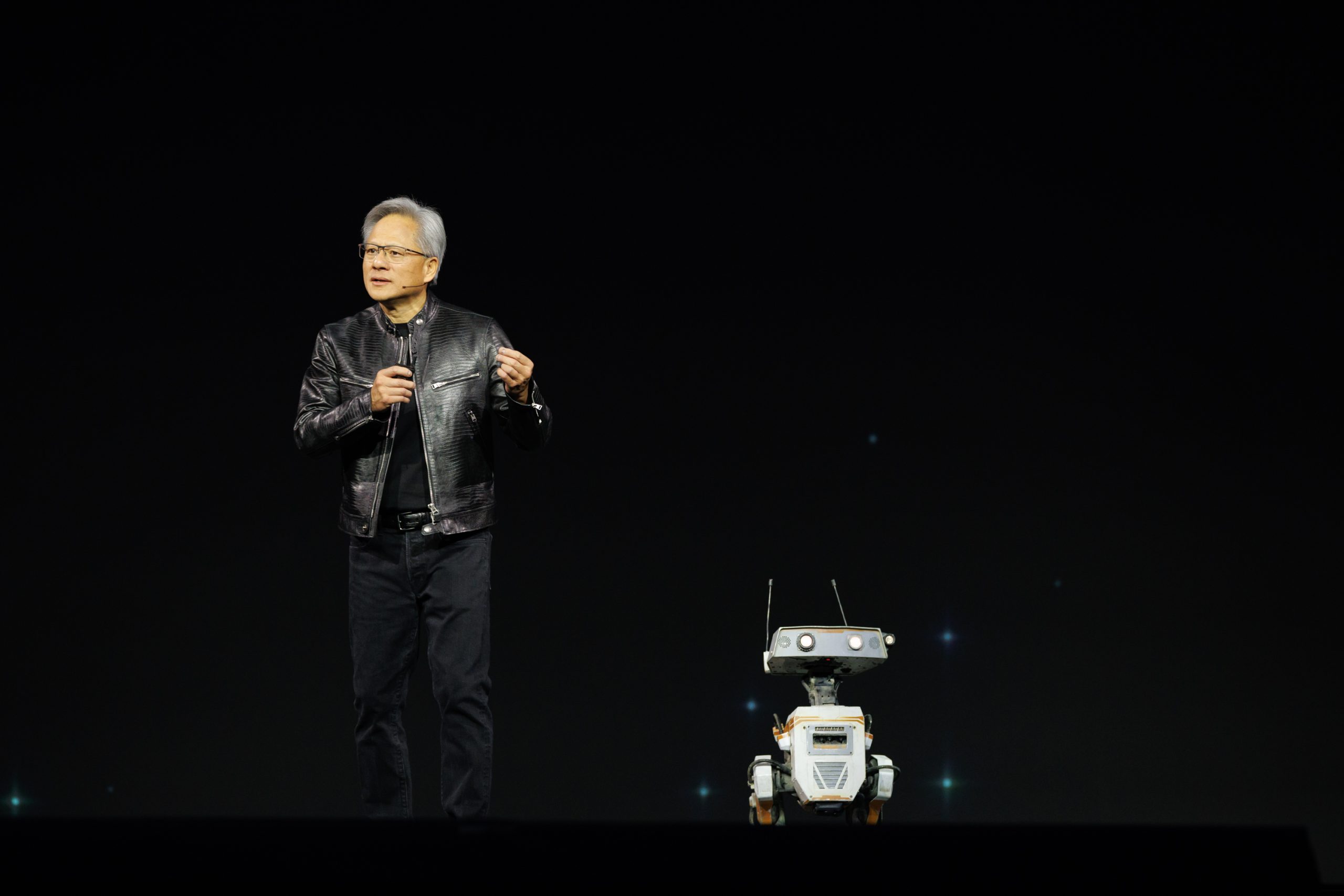
Nvidia stock continued climbing on Tuesday, extending its record-setting rally.
Shares of the AI chipmaker rose over 2% to hit a new record high of $220.41 in early trading after closing 2% higher at a record $219.44 on Monday.
However, the chipmaker gave up the gains and was trading in the red at the time of writing.
The slump was in line with weakness across major indexes.
The S&P 500 fell 0.5%, while the Nasdaq Composite dropped 0.8% as investors reacted to stronger-than-expected April consumer inflation data alongside rising oil prices.
Wall Street analysts continue to raise targets on Nvidia stock
Wells Fargo became the latest Wall Street firm to raise its price target on Nvidia, increasing its forecast to $315 from $265 while maintaining a Buy-equivalent Overweight rating.
The new target implies roughly 44% upside from Monday’s closing price.
Analyst Aaron Rakers said Nvidia continues benefiting from an environment where demand for AI computing infrastructure significantly exceeds available supply.
With continued indications pointing to a compute demand greater than supply backdrop, “we think a key factor driving Nvidia’s data-center revenue is the company’s ability to scale gigawatts of AI infrastructure deployed,” Rakers wrote.
The analyst highlighted Nvidia’s Blackwell AI platform as a major growth driver and said the company’s AI infrastructure pipeline could exceed $1 trillion by 2027.
Wells Fargo also pointed to additional upside from Nvidia’s broader ecosystem offerings, including next-generation inference systems tied to the company’s future Vera Rubin architecture.
Susquehanna also lifted its Nvidia price target earlier today, raising it to $275 from $250 while maintaining a Positive rating.
The firm said it expects stronger-than-anticipated financial results and guidance as Nvidia’s GB300 Blackwell platform ramps production through the first half of 2026.
Susquehanna increased its long-term data-center forecasts and now expects combined Blackwell and Rubin platform revenue to approach $1 trillion through calendar year 2027, up from prior estimates of $940 billion.
The firm noted that Nvidia’s Rubin architecture remains on track for a second-half 2026 launch after initial samples were delivered to customers earlier this year.
The growing bullishness across Wall Street reflects investor confidence that AI infrastructure spending from hyperscalers and enterprises remains in the early stages of a multiyear expansion cycle.
China concerns remain in focus
Despite the bullish momentum, geopolitical risks surrounding China remain an overhang for Nvidia.
According to media reports, Nvidia Chief Executive Jensen Huang was not invited to join US President Donald Trump during the administration’s upcoming trip to Beijing.
The exclusion could complicate Nvidia’s efforts to expand sales of AI processors in China.
Nvidia has specifically designed modified H200 chips to comply with US export restrictions while still serving Chinese customers.
The company remains barred from selling its most advanced AI processors into China under current US trade rules.
Huang has repeatedly emphasized the strategic importance of the Chinese market, previously estimating that China represents a $50 billion AI infrastructure opportunity growing at roughly 50% annually.
Earlier this year, Huang said Nvidia had restarted manufacturing of H200 chips intended for China and had already received customer orders, though the company did not disclose expected revenue contributions.
The post Why analysts are raising Nvidia stock targets despite China and conflict concerns appeared first on Invezz